
Electrical safety and measurements
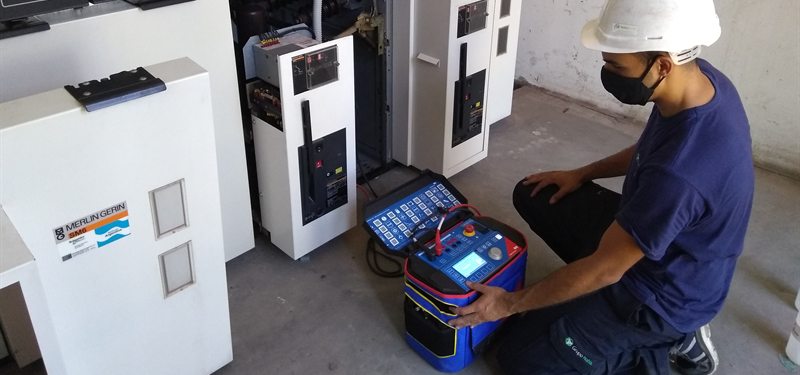
We help protect people and installations through measurements, verifications and electrical safety advice. We carry out periodic grounding checks, residual-current device tests and thermographic inspections to detect hazardous conditions, confirm that protective devices work and anticipate failures.
Electrical safety requires follow-up: use, wear and modifications can alter an installation’s protection conditions. That is why we turn the results of each intervention into concrete recommendations and support our clients in drawing up safe work procedures and training tailored to their staff’s tasks.
How we do it
We plan the verifications
We identify the panels, circuits and equipment to inspect, review the background and coordinate the operating conditions and shutdowns needed to carry out the tests.
We carry out the measurements and tests
We measure grounding resistance, verify the continuity of protective conductors and test the trip times and currents of residual-current devices. We complement these checks with thermographic inspections to detect abnormal heating in panels, connections and equipment in operation.
We prioritize corrections and follow-up
We deliver reports with results, deviations and recommendations ranked by criticality. We propose periodic checks to verify the improvements and detect changes in the condition of the installation.
Featured projects
- Electrical safety audits for Schneider Electric, Kyndryl, Tasa Logística, Nutrien, mAbxience, Sinergium Biotech, IBM and Pirelli, among others.
- Annual grounding measurement service for Pirelli, Kyndryl, Plaza Galicia, Exolgan, Tetra Pak and TASA, and residual-current device testing and thermography for COTO, Takeda and ExxonMobil.
- Pressure equipment testing for COTO.
Frequently asked questions
How often should grounding be measured?
Grounding should be measured at least once a year, under Resolution 900/2015 of Argentina’s Occupational Risk Superintendency (SRT). It is also worth repeating after the installation is modified, because use, wear and changes can alter its protective conditions.
What does SRT Resolution 900/15 require?
SRT Resolution 900/15 sets the protocol for measuring grounding and verifying the continuity of exposed conductive parts in workplaces, signed by a licensed professional. Along with the measurements we deliver the protocol and a report with deviations and recommendations ranked by criticality; if you use SIGER, it is uploaded to the platform, as we do for COTO’s 62 stores.
How does a residual current device work and why should it be tested?
A residual current device (RCD) compares the current flowing into and out of a circuit and trips when it detects leakage, for example when a person touches a live part. It can be installed and still not work: testing confirms that it trips at the right current and within the right time.
What is electrical thermography? Does power need to be cut?
Electrical thermography is an inspection with an infrared camera that detects abnormal heating in switchboards, connections and equipment before it causes a failure. No shutdown is needed: it is done with the installation running and under load, which is when those hot spots appear.
What inspections do pressure vessels need?
Equipment such as compressors, compressed air receivers and boilers requires periodic inspections and tests, with the documentation demanded by the enforcement authority of each jurisdiction. We carry out those tests and inspections; for example, for COTO’s stores.